




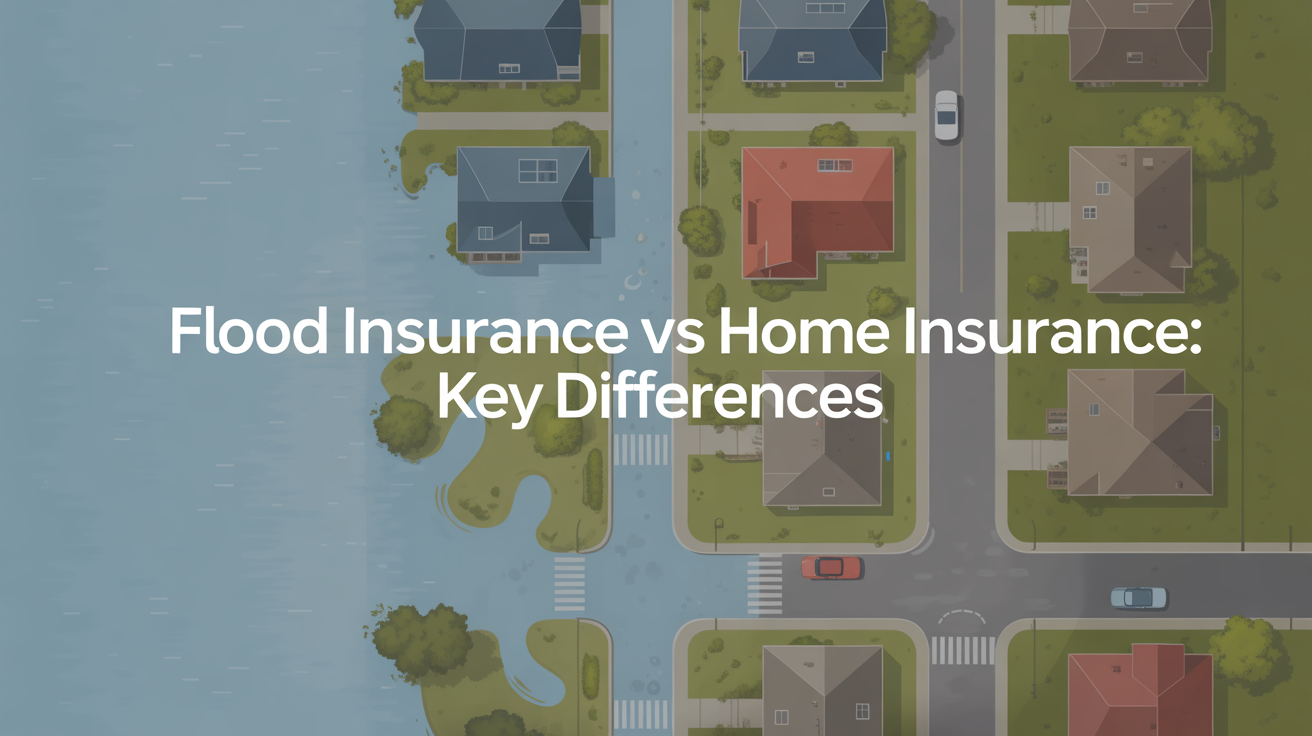
Many homeowners mistakenly believe their property is completely protected under a standard home insurance policy. However, when it comes to flood-related damage, most policies exclude this type of natural disaster entirely. That’s where a separate policy specifically for flooding becomes essential. This article breaks down Flood Insurance vs Home Insurance: Key Differences so you can clearly understand what each policy covers, what it doesn’t, and how both work together to safeguard your home.
Whether you live in a high-risk flood zone or simply want to avoid unexpected financial losses, knowing these differences can help you make an informed and cost-effective decision.
What Is Home Insurance?
Home insurance is a broad policy that covers your home structure, personal belongings, and liability for injuries on your property. Most providers include additional living expenses (ALE) if you need temporary housing after a covered loss.
Common Perils Covered by Home Insurance
-
Fire and smoke damage
-
Theft and vandalism
-
Windstorms, hail, and lightning
-
Explosions
-
Falling objects
-
Certain types of water damage (not floods)
Types of Home Insurance Policies
-
HO-3 Policy (Most Common): Covers your home for all perils except those specifically excluded.
-
HO-5 Policy (Premium): Offers more comprehensive protection for both your home and belongings.
-
HO-1 & HO-2 Policies: More basic and cover named perils only.
What Home Insurance Does Not Cover
Most homeowners are surprised to learn that floods are not covered. In addition to flooding, home insurance usually excludes:
-
Earthquakes
-
Landslides
-
Sewer backups (unless you add a rider)
-
Power failure
-
Neglect or poor maintenance
This is where having a separate policy becomes important—and potentially lifesaving for your finances.
What Is Flood Insurance?
Flood insurance provides financial protection for losses caused by natural flooding events. It typically covers damage resulting from overflowing rivers, heavy rainfall, melting snow, storm surges, blocked drainage systems, and similar environmental causes.
Flood insurance is offered through:
-
The National Flood Insurance Program (NFIP)
-
Private flood insurance companies
What Flood Policies Typically Cover
Flood insurance includes two main components:
1. Building Coverage
-
Foundation
-
Electrical & plumbing systems
-
Furnace and water heaters
-
Kitchen appliances
-
Permanently installed flooring, cabinets, and paneling
2. Personal Property Coverage
-
Furniture
-
Electronics
-
Clothing
-
Curtains
-
Portable appliances
What Flood Insurance Usually Does Not Cover
-
Temporary housing or ALE
-
Damage caused by moisture, mildew, or mold not caused by a flood
-
Landscaping
-
Currency, precious metals, and important papers
-
Vehicles
Using the Focus Keyword (3 Instances Only)
1️⃣ Flood Insurance vs Home Insurance: Key Differences become clearer when you understand that each policy protects against completely different risks.
2️⃣ When comparing Flood Insurance vs Home Insurance: Key Differences, the most important point is that standard home policies exclude flooding entirely.
3️⃣ Understanding Flood Insurance vs Home Insurance: Key Differences helps homeowners avoid costly coverage gaps that could lead to major financial loss.
Why Home Insurance Does Not Cover Flooding
Insurance companies classify flooding as a high-risk and high-cost event. Because floods can impact hundreds or thousands of homes at once, insurers avoid offering it under standard policies.
This separation also keeps regular home insurance premiums more affordable. If flood coverage were included, average homeowners would pay significantly higher rates—even if they lived far from flood-prone areas.
Key Differences Between Flood Insurance and Home Insurance
Below is an easy breakdown of how the two policies differ:
1. Type of Damage Covered
-
Home Insurance covers common risks such as fire and theft.
-
Flood Insurance covers water damage from natural flood events only.
2. How Water Damage Is Classified
-
Home insurance MAY cover sudden water damage from burst pipes or accidental overflow.
-
Flood insurance covers only water that first touches the ground before entering your home.
3. Availability
-
Home insurance is widely available through dozens of private providers.
-
Flood insurance is available through NFIP or specialized private insurers.
4. Cost Differences
Flood insurance typically varies based on:
-
Elevation of the home
-
Flood zone classification
-
Foundation type (slab, basement, crawlspace)
-
Building age
Home insurance costs depend more on:
-
Home replacement value
-
Location
-
Claim history
-
Coverage levels
5. Lender Requirements
Mortgage lenders may require flood insurance if your home is in a high-risk flood zone. Home insurance is required for virtually all mortgages.
Why You Might Need Both Coverages
Many homeowners assume they are safe because floods are rare in their area. However, according to FEMA, more than 20% of flood claims come from moderate to low-risk flood zones. Even a few inches of water can cost tens of thousands of dollars in repairs and replacements.
Having both policies gives you complete protection:
-
Home insurance covers fire, theft, wind, and liability.
-
Flood insurance protects against catastrophic water damage that home policies exclude.
Without both, you risk paying out of pocket for major losses.
Real-Life Example of Coverage Gaps
Imagine a tropical storm causes heavy rainfall that overwhelms the storm drains, resulting in water flowing into your home. Even if your home insurance includes water damage riders, this event would likely be classified as a flood—meaning your home insurance will not cover it.
However, if a pipe bursts inside your home and floods your living room, flood insurance will not pay for it because it is not environmental water. Only home insurance covers that type of loss.
How to Decide Which Policy You Need
1. Check Your Flood Zone
Use FEMA’s online Flood Map Service Center:
🔗 https://msc.fema.gov/portal/home
This helps you understand your risk level and whether your lender may require flood insurance.
2. Evaluate Environmental Risks
Consider local geography, such as:
-
River proximity
-
Coastal exposure
-
Soil drainage quality
-
Regional weather patterns
3. Review Your Home Insurance Policy Carefully
Many homeowners are shocked after filing a claim to discover they lacked coverage for certain water-related risks. Review exclusions in detail or speak with your insurance provider.
4. Consider Private Flood Insurance
Private flood insurance often offers:
-
Higher coverage limits
-
Faster claim payouts
-
Additional benefits not included in NFIP policies
-
Shorter waiting periods
If NFIP’s limits aren’t enough to fully rebuild your home, a private policy may be a better fit.
Cost Comparison: Flood vs Home Insurance
Typical Home Insurance Cost
Home insurance in the U.S. usually ranges between $1,000–$2,000 per year, depending on your state and home value.
Typical Flood Insurance Cost
NFIP policies average around $900–$1,200 per year, but can be more or less depending on location. Private flood insurance varies widely but can sometimes be cheaper in low-risk zones.
Learn more through FEMA’s NFIP page:
🔗 https://www.fema.gov/flood-insurance
Tips for Lowering Insurance Costs
For Home Insurance
-
Bundle with auto insurance
-
Install security systems
-
Maintain a good credit score
-
Increase your deductible
For Flood Insurance
-
Elevate your home equipment (furnaces, electrical panels)
-
Add flood vents
-
Improve drainage around your home
-
Elevate the home structure if possible
These improvements not only reduce risk but can significantly lower your premiums.
Final Thoughts
Homeowners often don’t realize the importance of having separate flood coverage until it’s too late. Understanding the differences between these two essential policies ensures your property is fully protected from both everyday risks and major natural disasters.
Whether you live near water or simply want peace of mind, investing in the right combination of home and flood insurance gives you the financial security you need to protect your biggest asset—your home.